Editorial Guide
The city guide that helps you decide whether this stop fits the trip.
Reading Time
9 min guide
Best Use
Inland route travelers, cyclists, and pass-country pacing
Article Map
Why The System Picks Mungyeong Travel Guide — Road To Korea
A threshold city for travelers who want the inland line to feel topographic, historic, and clearly different from the default Seoul-to-Busan corridor.
From Seoul
Intercity bus or car • About 2.5 to 3 hours
Ideal Stay
1 night
Route Logic
Pairs naturally with Chungju before it or Andong after it.
Visual Preview
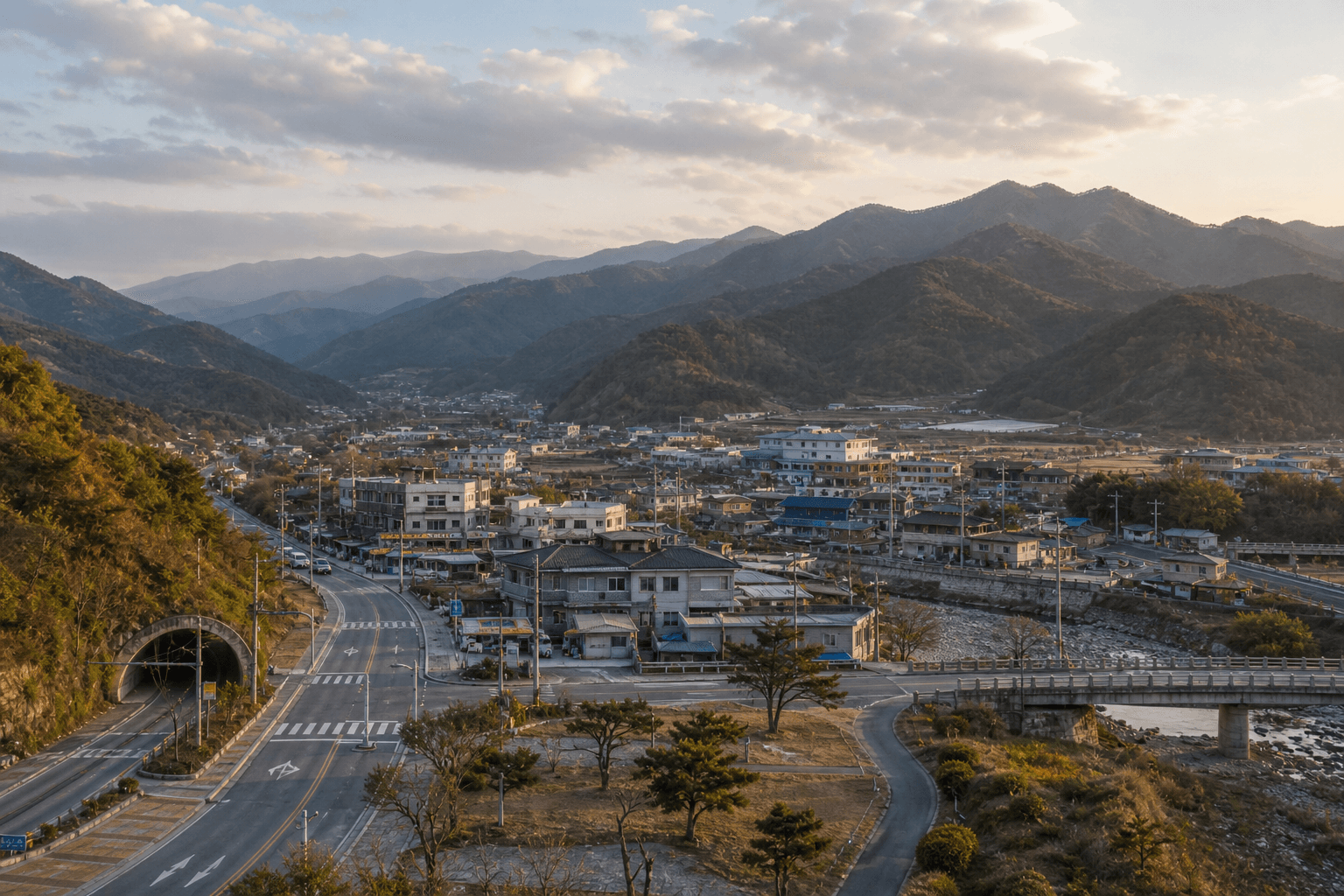
Opening image
Mungyeong Travel Guide — Road To Korea at a glance
A mountain-pass city where the route narrows, the terrain becomes meaningful, and crossing the peninsula starts to feel earned.
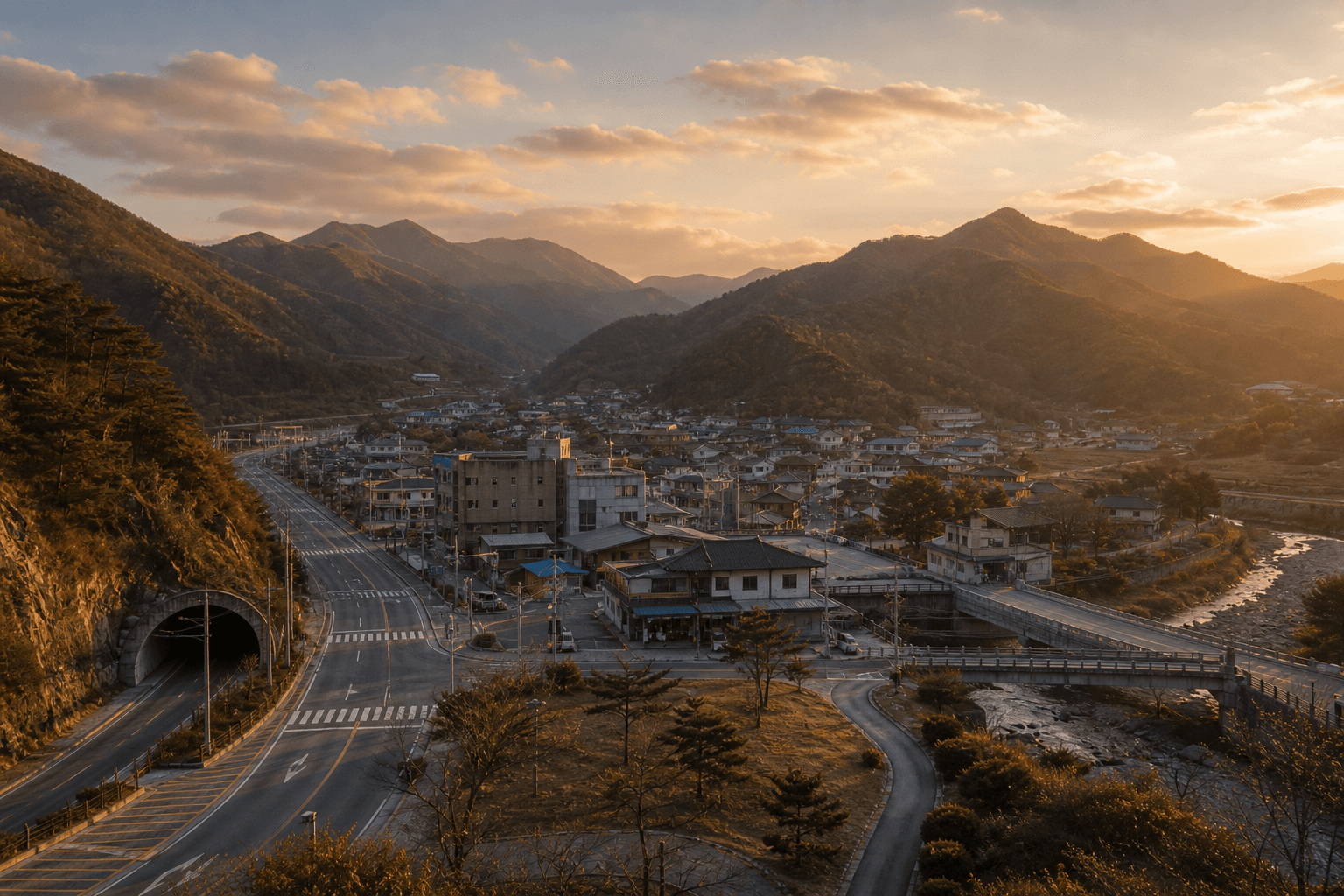
Threshold image
The gate is the reason Mungyeong does not feel interchangeable
Mungyeong becomes memorable when the route visibly passes through something. The gate image matters because it turns abstract inland travel into a concrete threshold.
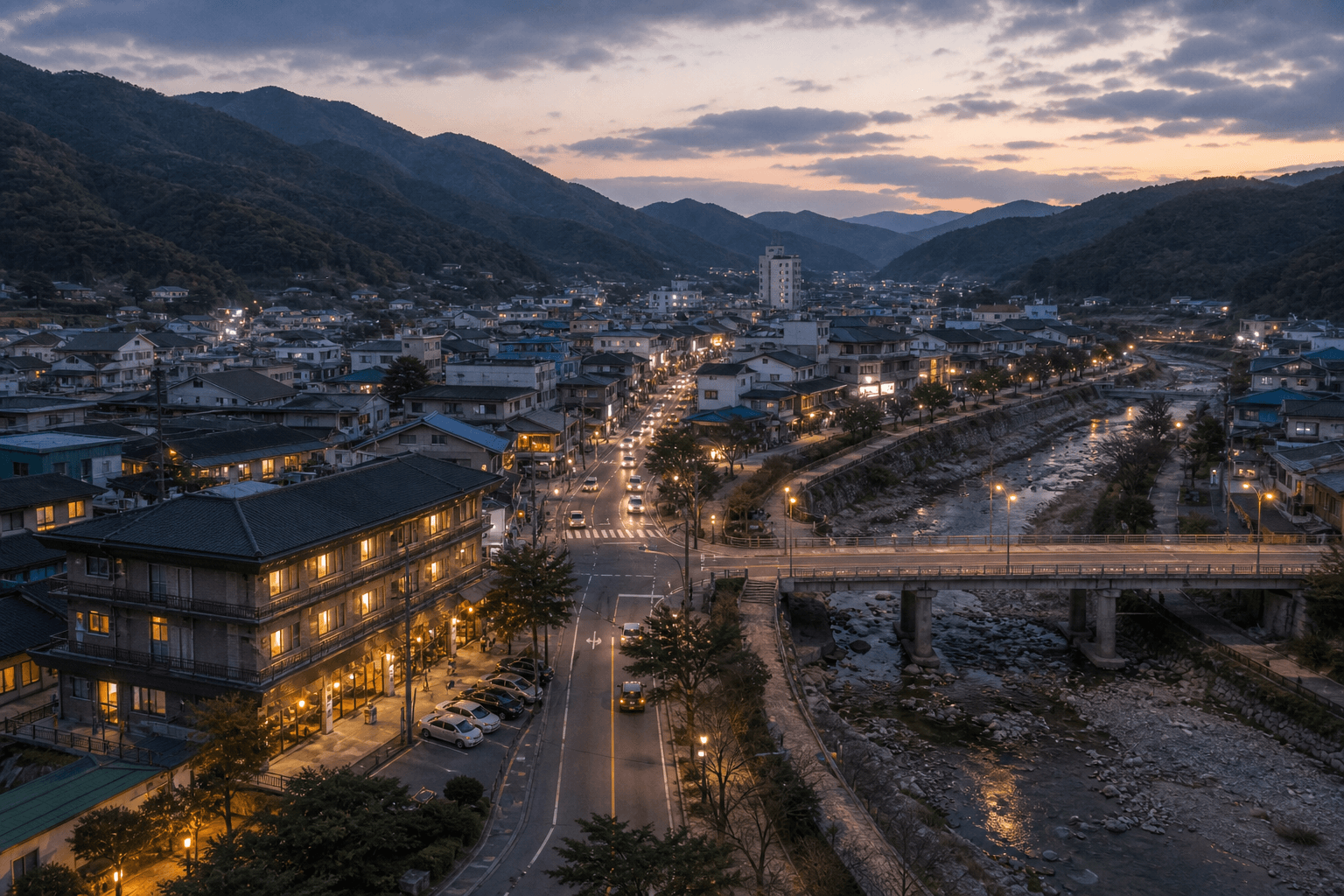
Pass-country atmosphere
The open film-set edge makes the crossing feel spatial, not symbolic only
The city works best when the pass has visual breadth. This is what helps the overnight feel like a chapter in the land rather than a random place to stop the car.
From Seoul
How to reach Mungyeong Travel Guide — Road To Korea without overcomplicating the route.
Best Choice
Intercity bus or car
Bus works when budget matters more than shaving every hour off the route.
Travel Window
About 2.5 to 3 hours
A direct coach can feel easier than stacking multiple local transfers, especially with luggage.
Slow Travel Note
Use it when the trip is intentionally slower and cost-aware from the start.
Local Support Map
Where Mungyeong changes the route from transfer into crossing
Mungyeong is not a generic stop map. It is a threshold map for understanding where to stage the pass, where to sleep if the crossing should feel deliberate, and where the route starts acting like real pass country.
Mungyeong Saejae gateway zone
The symbolic and geographic point where the route stops being background movement and becomes a crossing with shape.
Town stay grid
The easiest overnight base for a practical stay that keeps access, dinner, and the next morning simple.
Saejae-edge stay zone
A slower stay logic near the pass for travelers who want the threshold itself to define the overnight.
Pass-country meal and omija zone
A functional eating zone for warming up, fueling up, tasting local omija, and resetting before or after the crossing.
Omija Theme Tunnel
A former coal-transport tunnel turned tourism space where omija, pottery, and tunnel memory sit together.
Mungyeong Coal Museum
An industrial-memory anchor that keeps Mungyeong from being only gates and scenery.
Before-the-pass reset zone
A lighter reset point for reorganizing the route before or after the threshold instead of turning every stop into a full meal or full stay.
Southbound handoff line
A directional point that makes the route feel committed after the threshold has been crossed.
Route Role
On the inland line, Mungyeong is the city that turns geography into editorial meaning. This is where the route visibly crosses a threshold and begins to feel earned.
Support Summary
Mungyeong is strongest as a chapter marker. Its value comes from gate logic, pass preparation, old-road memory, craft culture, omija identity, and the feeling that the route is moving through terrain with history instead of simply drifting south.
Past and Present
Mungyeong matters because its older story and present life both change how this route feels.
Historical Weight
Mungyeong carries the old-road memory of crossing Korea. Mungyeongsaejae Pass, its three gates, and the Great Yeongnam Road make the city feel like the place where Seoul-to-Busan movement becomes a real threshold rather than a line on a map.
Modern Identity
Modern Mungyeong keeps that threshold alive through Saejae tourism, old-road museums, filming sets, omija products, chasabal pottery, and coal-mining heritage. It is not only a scenic pass; it is a city that turns old movement into present-day culture.
Route Meaning
On Route 1, Mungyeong is the threshold/pass sample. After Yeoju explains the split and Chungju explains recovery, Mungyeong explains why the inland route has drama: the traveler crosses a historic gate before Andong gives the line cultural weight.
Stay Logic
Use a stay here when you want to isolate the pass-country chapter, avoid overloading the next day, or give the crossing its own rhythm instead of flattening it into one long transfer.
Food Logic
Food is functional here in the best sense, but Mungyeong also has a distinct local flavor through omija. Warm meals, omija products, simple reset dining, and enough fuel make the pass feel prepared rather than improvised.
Next Leg
After Mungyeong, the inland route descends into a more committed southbound logic. The next chapter should feel less like approach and more like continuation.
Where To Stay
Choose the stay zone that matches the route you want tomorrow.
These zones are not generic hotel advice. They are the clearest overnight shapes for keeping this stop aligned with the rest of Route 1.
Stay in town for control
Best For
Travelers who want the easiest dinner-sleep-depart sequence.
The city core is the practical choice when the stop is about pacing and route management more than immersion in the pass itself.
Stay near the Saejae approach
Best For
Cyclists and inland-route travelers who want the crossing chapter to define the night.
Sleeping closer to the pass makes the route feel authored and keeps the next morning aligned with the terrain logic that brought you here.
Stay Planning Fit
Where to stay in Mungyeong Travel Guide — Road To Korea depends on what the next leg needs.
Strongest stay-planning angle: one town-core practical stay cluster and one pass-adjacent slower stay cluster near the Saejae approach.
Stay planning
Sleep in Mungyeong Travel Guide — Road To Korea
If this stop becomes an overnight, compare a couple of booking platforms before you lock it in. Route logic gets better when the right city earns a real stay.
Decision Pattern
Stage the pass here
Cyclists, inland self-drives, and travelers who want the crossing to feel intentional.
Mungyeong is the right place to formalize the transition. It makes the route easier to read and gives the pass its own chapter.
Decision Pattern
Keep it brief but specific
Travelers who do not want a long stay but still want the route to feel shaped by geography.
Even a short checkpoint or meal stop works here if it preserves the sense of threshold instead of erasing it.
Decision Pattern
Sleep before the harder leg
Anyone whose next day should begin sharper, lighter, and with clearer terrain logic.
An overnight in pass country can reduce decision fatigue and keep the southbound line from becoming one blurred transfer.
The gate is the reason Mungyeong does not feel interchangeable
Mungyeong becomes memorable when the route visibly passes through something. The gate image matters because it turns abstract inland travel into a concrete threshold.
Internal · Generated route editorial imageThe open film-set edge makes the crossing feel spatial, not symbolic only
The city works best when the pass has visual breadth. This is what helps the overnight feel like a chapter in the land rather than a random place to stop the car.
Internal · Generated route editorial image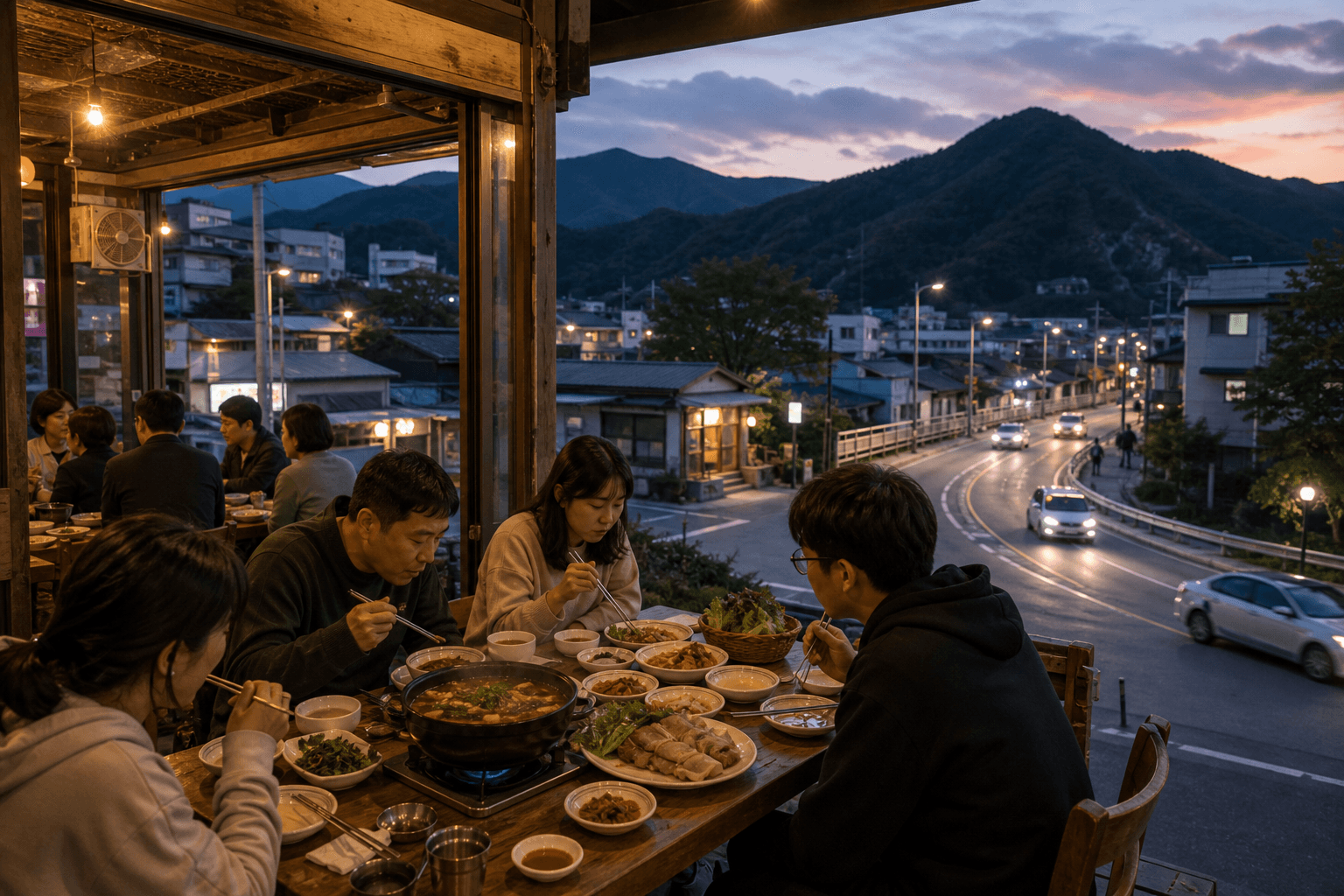
Craft, omija, and mining memory keep the crossing present tense
Not every useful image has to be monumental. Smaller details keep Mungyeong from reading like a scenic backdrop and make room for chasabal pottery, omija, old tunnels, and the working memory behind the route.
Internal · Generated route editorial imageMungyeongsaejae is the proof that this is pass country
VisitKorea describes Mungyeongsaejae Pass as crossing Joryeongsan Mountain, with three gates designated together as Historic Site No. 147. This is the source that anchors the threshold story.
Use as the core historical and route-logic source for gates, pass terrain, and old-road positioning.
Official reference · VisitKorea Mungyeongsaejae Provincial ParkMungyeong City frames Saejae as cultural assets and natural heritage
Mungyeong City lists Mungyeong Gwanmun, the Mungyeongsaejae old road, Yeongnamdaero, temples, mountain peaks, and Baekdudaegan Range as part of the Saejae landscape.
Use to keep the pass story locally grounded rather than relying only on broad travel summaries.
Official reference · Mungyeong City Culture & TourismChasabal keeps Mungyeong in the present
VisitKorea describes the Mungyeong Chasabal Festival as honoring traditional Korean pottery and ancestral craftsmanship, with exhibitions, hands-on programs, and tea-bowl culture.
Use as the craft/present-day layer so the page does not become only mountain-pass history.
Official reference · VisitKorea Mungyeong Chasabal FestivalOmija gives the pass a local flavor
VisitKorea describes the Omija Theme Tunnel as a former coal-transport tunnel reborn for tourism, with omija products and pottery available inside the space.
Use as a bridge source for modern tourism, omija specialty products, pottery, and coal-route memory.
Official reference · VisitKorea Mungyeong Omija Theme TunnelCoal history gives Mungyeong a second modern layer
VisitKorea describes the Mungyeong Coal Museum as showing coal history and the lives of miners in what was once one of Korea’s productive coalfields.
Use when expanding the present/industrial-memory layer or requesting more authentic imagery later.
Official reference · VisitKorea Mungyeong Coal MuseumImage Pipeline
Every image slot has a production purpose.
hero
publish-ready
Hero image should read as pass-country threshold.
history
publish-ready
Saejae gates, old road, and defense history.
present
replace-soon
Chasabal pottery, omija, coal heritage, and contemporary tourism.
route
publish-ready
Pass-country spatial cue between Chungju and Andong.
street
replace-soon
Omija tunnel, cafes, meals, and local reset details.
Local Reading
Why Mungyeong earns a stop
Mungyeong matters when the route should feel shaped by the land. It is where the inland line stops being an abstract alternative and becomes an actual crossing with consequence.
Local Reading
Why pass-country should remain visible
If the city is reduced to one sightseeing note, the route loses its strongest topographic chapter. Keeping the pass visible is what makes Mungyeong distinct from a routine inland pause.
Local Reading
Why the present belongs beside the old road
Mungyeong is not only old gates and mountain paths. Omija products, chasabal pottery, filming sets, and coal-museum memory keep the city active in the present, turning old movement into craft, food, tourism, and industrial remembrance.
Local Reading
How to use the overnight well
A night here is most useful when it breaks the route into before-the-pass and after-the-pass logic. That separation helps both drivers and riders keep the terrain meaningful instead of exhausting.
Local Reading
Why the town core and the pass edge are different decisions
Mungyeong becomes clearer when you stop treating it like one flat city. The town core is the practical sleep choice, while the Saejae edge is for travelers who want the crossing itself to dominate the stay.
Local Reading
Why this city can convert into lodging intent
Unlike a generic middle stop, Mungyeong can justify a night because sleeping here changes how tomorrow feels. That makes accommodation content more natural than in a purely logistical pause.
Local Reading
Why riders and drivers both keep it
Cyclists use Mungyeong to isolate the hardest chapter. Drivers use it to preserve terrain meaning instead of flattening the inland route into one long easy descent. The logic differs, but the overnight value is real for both.
Mungyeong Saejae gateway zone
The symbolic and geographic point where the route stops being background movement and becomes a crossing with shape.
Use this when the page needs one clear image of why Mungyeong belongs on the inland line at all.
Town stay grid
The easiest overnight base for a practical stay that keeps access, dinner, and the next morning simple.
Best when the stop is more about pacing than about building a resort-style recovery chapter.
Saejae-edge stay zone
A slower stay logic near the pass for travelers who want the threshold itself to define the overnight.
This is stronger for authored inland travel than for purely practical late arrivals.
Pass-country meal and omija zone
A functional eating zone for warming up, fueling up, tasting local omija, and resetting before or after the crossing.
Treat this as route fuel with local identity, not as a city where destination dining has to carry the whole narrative.
Omija Theme Tunnel
A former coal-transport tunnel turned tourism space where omija, pottery, and tunnel memory sit together.
This is useful for the page because it connects modern local products to industrial route memory in one place.
Mungyeong Coal Museum
An industrial-memory anchor that keeps Mungyeong from being only gates and scenery.
Use this when the story needs to show how the region changed from old roads to resource extraction to tourism.
Before-the-pass reset zone
A lighter reset point for reorganizing the route before or after the threshold instead of turning every stop into a full meal or full stay.
Useful when the route needs a psychological break even more than a long physical recovery.
Southbound handoff line
A directional point that makes the route feel committed after the threshold has been crossed.
Good for explaining how the route changes after Mungyeong instead of ending with the city itself.
Trip Questions
What travelers usually mean when they search for Mungyeong Travel Guide — Road To Korea.
Mungyeong Korea historic pass city on the inland Seoul to Busan route
Route intent
Heritage intent
Local intent
Why is Mungyeong important on an inland route?
Mungyeong turns the route into a real crossing through pass country, old roads, gates, and the memory of movement between Seoul and the southeast.
What should travelers look for in Mungyeong?
The strongest mix is Mungyeongsaejae, old-road history, omija, pottery, and a stay that lets the pass chapter breathe.
The Pass-Country Threshold
A mountain-pass city where the route narrows, the terrain becomes meaningful, and crossing the peninsula starts to feel earned.
Mungyeong is less about urban density and more about transition. The city carries the logic of gates, passes, and crossings, so staying here makes sense when the route should feel shaped by geography rather than only by transfer time.
Mungyeong is not a generic stop map. It is a threshold map for understanding where to stage the pass, where to sleep if the crossing should feel deliberate, and where the route starts acting like real pass country.
Mungyeong is strongest as a chapter marker. Its value comes from gate logic, pass preparation, old-road memory, craft culture, omija identity, and the feeling that the route is moving through terrain with history instead of simply drifting south.
On the inland line, Mungyeong is the city that turns geography into editorial meaning. This is where the route visibly crosses a threshold and begins to feel earned.
How to Use Mungyeong in a Korea Itinerary
Mungyeong is easiest to understand as a planning tool. Instead of asking whether it can compete with Seoul, Busan, Jeju, or Gyeongju, look at the job it performs inside the trip: it can slow down a long transfer, turn a regional corridor into a real journey, or give a traveler a lower-pressure night before the next larger destination.
For first-time visitors to Korea, that role matters. Many itineraries become too dependent on headline cities, which creates long travel days and very little sense of the regions in between. A stop like this helps the route breathe while still keeping the schedule practical for trains, express buses, rental cars, or a slower cycling and road-trip pace.
What Makes Mungyeong Worth Planning
Why Mungyeong earns a stop
Mungyeong matters when the route should feel shaped by the land. It is where the inland line stops being an abstract alternative and becomes an actual crossing with consequence.
Why pass-country should remain visible
If the city is reduced to one sightseeing note, the route loses its strongest topographic chapter. Keeping the pass visible is what makes Mungyeong distinct from a routine inland pause.
Why the present belongs beside the old road
Mungyeong is not only old gates and mountain paths. Omija products, chasabal pottery, filming sets, and coal-museum memory keep the city active in the present, turning old movement into craft, food, tourism, and industrial remembrance.
How to use the overnight well
A night here is most useful when it breaks the route into before-the-pass and after-the-pass logic. That separation helps both drivers and riders keep the terrain meaningful instead of exhausting.
Why the town core and the pass edge are different decisions
Mungyeong becomes clearer when you stop treating it like one flat city. The town core is the practical sleep choice, while the Saejae edge is for travelers who want the crossing itself to dominate the stay.
Why this city can convert into lodging intent
Unlike a generic middle stop, Mungyeong can justify a night because sleeping here changes how tomorrow feels. That makes accommodation content more natural than in a purely logistical pause.
Best Ways to Plan the Stop
- Stage the pass here Cyclists, inland self-drives, and travelers who want the crossing to feel intentional. Mungyeong is the right place to formalize the transition. It makes the route easier to read and gives the pass its own chapter.
- Keep it brief but specific Travelers who do not want a long stay but still want the route to feel shaped by geography. Even a short checkpoint or meal stop works here if it preserves the sense of threshold instead of erasing it.
- Sleep before the harder leg Anyone whose next day should begin sharper, lighter, and with clearer terrain logic. An overnight in pass country can reduce decision fatigue and keep the southbound line from becoming one blurred transfer.
Food, Stay, and Local Rhythm
Food is functional here in the best sense, but Mungyeong also has a distinct local flavor through omija. Warm meals, omija products, simple reset dining, and enough fuel make the pass feel prepared rather than improvised.
Use a stay here when you want to isolate the pass-country chapter, avoid overloading the next day, or give the crossing its own rhythm instead of flattening it into one long transfer.
Where to Stay
- Stay in town for control – Mungyeong town core – Travelers who want the easiest dinner-sleep-depart sequence. – The city core is the practical choice when the stop is about pacing and route management more than immersion in the pass itself.
- Stay near the Saejae approach – Pass edge – Cyclists and inland-route travelers who want the crossing chapter to define the night. – Sleeping closer to the pass makes the route feel authored and keeps the next morning aligned with the terrain logic that brought you here.
Places and Checkpoints to Consider
- Mungyeong Saejae gateway zone – Pass entry – The symbolic and geographic point where the route stops being background movement and becomes a crossing with shape. – Use this when the page needs one clear image of why Mungyeong belongs on the inland line at all.
- Town stay grid – City core – The easiest overnight base for a practical stay that keeps access, dinner, and the next morning simple. – Best when the stop is more about pacing than about building a resort-style recovery chapter.
- Saejae-edge stay zone – Pass-adjacent – A slower stay logic near the pass for travelers who want the threshold itself to define the overnight. – This is stronger for authored inland travel than for purely practical late arrivals.
- Pass-country meal and omija zone – Near pass approach – A functional eating zone for warming up, fueling up, tasting local omija, and resetting before or after the crossing. – Treat this as route fuel with local identity, not as a city where destination dining has to carry the whole narrative.
- Omija Theme Tunnel – Gomosanseong side – A former coal-transport tunnel turned tourism space where omija, pottery, and tunnel memory sit together. – This is useful for the page because it connects modern local products to industrial route memory in one place.
- Mungyeong Coal Museum – Gaeun side – An industrial-memory anchor that keeps Mungyeong from being only gates and scenery. – Use this when the story needs to show how the region changed from old roads to resource extraction to tourism.
- Before-the-pass reset zone – Saejae lead-in – A lighter reset point for reorganizing the route before or after the threshold instead of turning every stop into a full meal or full stay. – Useful when the route needs a psychological break even more than a long physical recovery.
Getting There and Moving On
Most travelers should check both rail and express-bus options before fixing Mungyeong in the schedule. Korea’s rail network is fast between major hubs, but buses can be more direct for secondary cities and coastal or inland support stops. If the route includes several smaller destinations, compare total door-to-door time rather than looking only at the fastest single segment.
After Mungyeong, the inland route descends into a more committed southbound logic. The next chapter should feel less like approach and more like continuation.
Best Season and Trip Length
Spring and autumn are the easiest seasons for most Korea routes because walking, station transfers, markets, gardens, coast paths, and temple visits all become more comfortable. Summer can still work, but build in shade and earlier starts. Winter is better for food-led stops, hot springs, city walks, and quieter scenery than for ambitious outdoor days.
For most visitors, Mungyeong works as either a focused day stop or a one-night pause. Add a second night only if the trip is deliberately slow, if you are using the city as a base for nearby places, or if recovery is more important than covering distance.
Frequently Asked Questions
Is Mungyeong worth visiting on a first Korea trip?
Mungyeong is worth considering if your itinerary already passes through the region or if you want a more balanced route between major cities. It is not always a replacement for a headline destination, but it can make the overall journey feel less rushed and more connected.
How long should I spend in Mungyeong?
Plan a half day if you only need a meal, walk, and transfer break. Plan one night if the stop is meant to reset the pace, support an early departure, or give the route a clearer regional chapter.
Should I travel by train, bus, or car?
Use trains for major-city connections when the timetable is direct. Use express buses when they reduce transfers. Use a car when the value of the stop depends on nearby viewpoints, coast roads, rural areas, or flexible departure times.
Practical Info
- Check Naver Map or KakaoMap for local transit because Korean mapping coverage is stronger there than in many global apps.
- Carry a transport card for buses and subways, but keep a backup payment card for taxis, lockers, and smaller terminals.
- Book lodging near the station, terminal, or next-day departure road unless the stop is specifically built around a scenic area.
- Save the Korean name of your hotel and first destination before arrival; it makes taxi and local bus questions much easier.